
You want to talk because something feels wrong between you and your partner. They become quiet or ask for space. Their distance makes you more anxious, so you ask more questions or push for reassurance.
The harder you try to connect, the more they pull away. The more they pull away, the more urgently you seek connection.
Eventually, both of you feel misunderstood.
Anxious attachment and avoidant relationship patterns can contribute to this painful cycle. Understanding what happens between you can help you respond with greater clarity and build emotional connection.
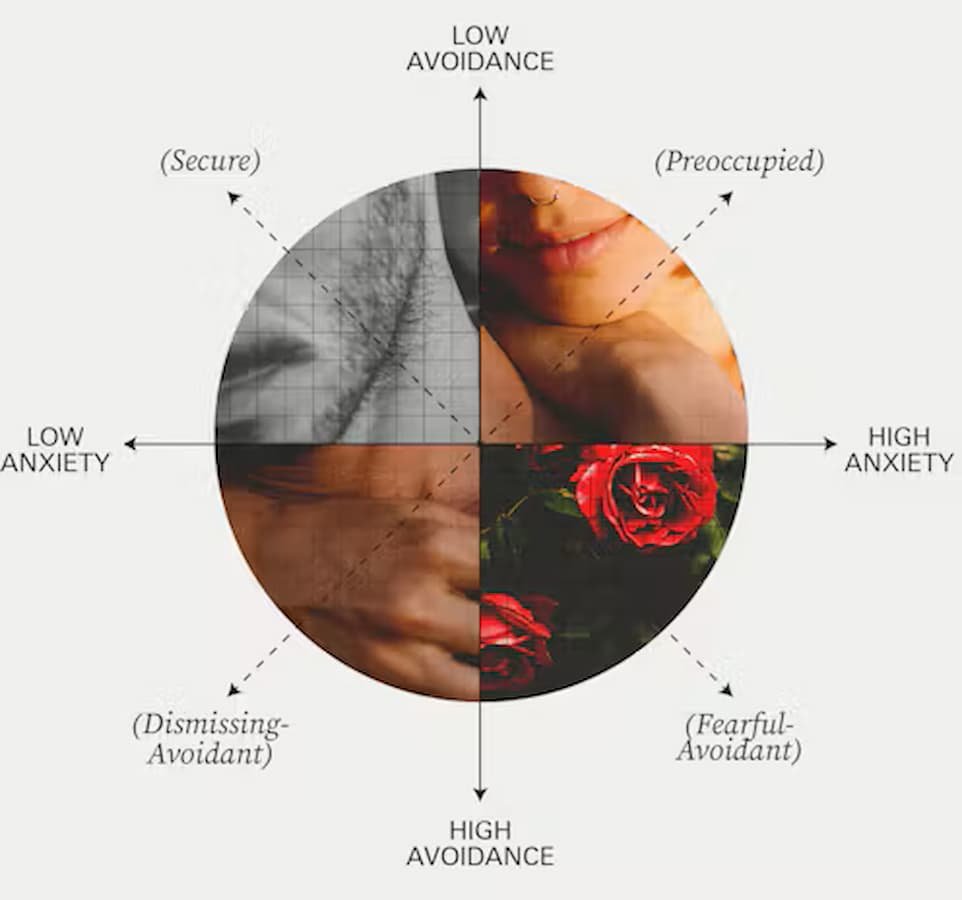
What Are Attachment Patterns?
Attachment patterns describe ways people experience closeness, trust, and vulnerability in relationships. They can influence how you seek support and respond when connection feels uncertain.
These patterns may be shaped by early experiences and later relationships. They can also vary across relationships and change over time.
An attachment style is not a mental health diagnosis or a complete explanation of someone’s behavior. It is one framework for understanding relationship patterns.
What Does Anxious Attachment Look Like?
If you experience anxious attachment, uncertainty in a relationship may feel especially difficult. A delayed text, a change in tone, or a partner’s request for space can bring up fears of rejection or abandonment.
You might notice:
Asking repeatedly whether your partner is upset.
Looking for reassurance that the relationship is okay.
Closely monitoring changes in your partner’s mood.
Feeling pressure to resolve disagreements immediately.
Struggling to focus until you feel connected again.
Underneath these reactions may be a question such as: “Do I still matter to you?”
Wanting reassurance is understandable. When relief fades quickly, however, repeated checking can become exhausting for both partners without creating lasting security.
What Does Avoidant Attachment Look Like?
If you lean toward avoidant attachment patterns, emotionally intense conversations may feel overwhelming. You may want time alone to think or have difficulty expressing needs when you feel pressured.
You might notice:
Becoming quiet during disagreements.
Pulling away when a conversation feels emotionally intense.
Finding it difficult to ask for comfort or support.
Minimizing your feelings or focusing only on practical solutions.
Feeling uncomfortable with dependence or vulnerability.
Underneath these reactions may be a question such as: “Can I stay connected without feeling overwhelmed or losing my autonomy?”
A partner’s withdrawal does not automatically mean they do not care. Still, repeated withdrawal without communication or repair can leave the other person feeling alone.
The Anxious-Avoidant Relationship Cycle
An anxious-avoidant relationship can become caught in a repeating pattern:
One partner notices distance and seeks connection.
The other feels pressured and withdraws.
Withdrawal increases the first partner’s anxiety.
More urgent questions or criticism increase the other partner’s urge to escape.
Both feel less safe and less understood.
These roles are not always fixed. Partners may switch positions depending on the situation.
Recognizing the cycle can help you move from blaming each other to understanding what each person does when distressed—and what needs to change.
Why Do I Shut Down During Conflict?
Shutting down during an argument can happen when someone feels overwhelmed, struggles to find words, or fears making the conflict worse. Other times, disengagement becomes a way of avoiding a difficult conversation.
Whatever the reason, the impact matters.
A pause can support a healthier conversation when it includes a clear plan to return:
“I’m overwhelmed and having trouble listening. I need a break. Can we come back to this at 7:00?”
Following through helps make space more predictable. Repeatedly leaving a conversation unresolved can deepen insecurity and resentment.
How to Respond to Reassurance-Seeking
Reassurance can be a healthy part of emotional intimacy. The goal is to combine a partner’s support with skills for managing uncertainty.
If you are seeking reassurance, try naming the feeling and making a specific request:
“I’m feeling disconnected. Could we spend ten minutes checking in tonight?”
You can also ask yourself:
What do I know, and what am I assuming?
Is this situation bringing up an older fear?
What can help me settle while I wait to talk?
What request would communicate my need clearly?
If your partner seeks reassurance, a direct response can be more helpful than irritation or vague promises:
“I care about you. I’m quiet because I’m tired. I can talk after dinner.”
Consistency over time helps build trust.
Building More Secure Relationship Patterns
Name the pattern early
Try: “I think we’re getting into our cycle. I’m pushing to talk, and you’re pulling away.”
Describe feelings without assigning motives
“I feel scared when we stop talking” opens a different conversation than “You don’t care about me.”
Make room for connection and space
Agree on how to request a pause, how long it will last, and when you will reconnect.
Practice repair.
Repair may include acknowledging your impact, apologizing, clarifying what you meant, and following through on a different response.
Keep accountability in the conversation
Attachment patterns can help explain behavior. Each partner remains responsible for communicating respectfully and addressing harmful actions.
How Couples Counseling Can Help
Couples counseling/marriage counseling can help partners recognize their conflict cycle, express underlying feelings, and practice more effective ways to seek connection or request space.
Attachment-based therapy, Gottman-informed approaches, and Internal Family Systems can support exploration of the fears and protective reactions that arise during relationship conflict.
The work involves helping both partners communicate their needs while responding to each other with greater understanding and consistency.
Online Relationship Counseling in Colorado and South Dakota
At Healing Journey Counseling & Coaching, we offer online couples counseling/marriage counseling and individual therapy in Colorado and South Dakota for people navigating attachment concerns, emotional disconnection, and recurring relationship conflict.
Whether you tend to seek reassurance or shut down when conversations become difficult, therapy can help you understand your reactions and practice new ways of connecting.
Contact our practice to explore support for a more secure, connected relationship. You may also book a free 20-minute consultation or schedule an appointment directly using the button below.